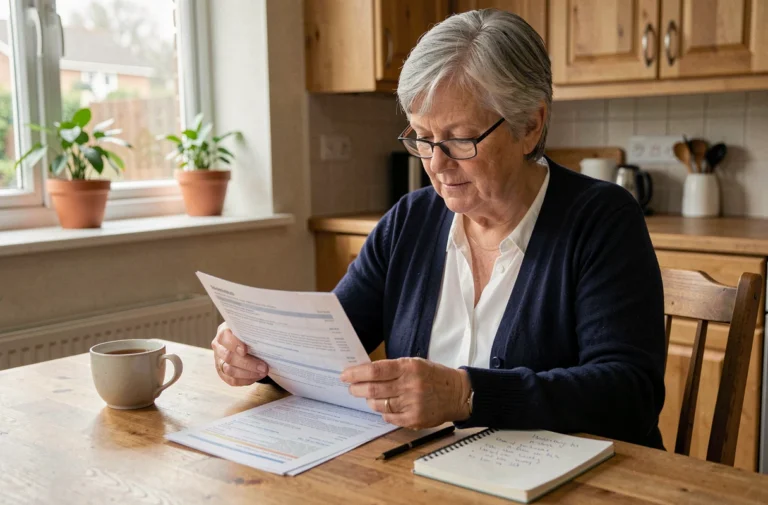
A self-employed person who issues invoices using a spreadsheet or a text document is exposed, since September 2026, to a technical gap with the obligations to receive electronic invoices via an approved platform. Invoicing software is no longer just a management convenience: it is the link that connects the self-employed individual to the electronic invoicing circuit imposed by the tax administration.
Electronic Invoicing 2026-2027: The Calendar That Constrains Self-Employed Individuals
Since September 1, 2026, all businesses subject to VAT established in France, including micro-enterprises and self-employed individuals under the VAT exemption, must be able to receive electronic invoices. This obligation to receive goes through an approved partner dematerialization platform (PDP) or the public invoicing portal.
Starting from September 1, 2027, these same self-employed individuals will have to issue their invoices in a structured electronic format for B2B transactions in France. Two aspects overlap: e-invoicing (issuing and receiving dematerialized invoices) and e-reporting (transmitting transaction data to the administration).
An appropriate invoicing software manages these two flows without manual intervention. Without this tool, the self-employed individual will have to manually create files in a structured format (Factur-X, UBL, or CII), and then upload them to an approved platform. We recommend anticipating the issuance phase now: the technical migration takes several weeks when starting from scratch.
The practical details of this transition are documented on the Club Auto-Entrepreneurs website, which outlines the features to check before choosing a tool compatible with the reform.

Structured Formats and Approved Platforms: What the Software Must Produce
The reform is not limited to sending a PDF by email. An electronic invoice in the regulatory sense is a file containing structured data that is machine-readable. Three formats are accepted: Factur-X, UBL, and CII. The first is a widely adopted PDF/XML hybrid in France. The other two are purely XML European standards.
Compliant invoicing software natively generates one of these formats and transmits it to the dematerialization platform chosen by the self-employed individual. The role of the approved PDP is to validate the invoice, route it to the recipient, and transmit the tax data to the administration. The public portal Chorus Pro remains a free option, but its ergonomics are not designed for daily customer invoicing use.
We observe that most software publishers for self-employed individuals now integrate a direct connection to one or more PDPs. Therefore, the primary technical selection criterion is native compatibility with at least one structured format and an approved PDP.
Mandatory Mentions and Numbering: The Errors That the Software Eliminates
An invoice from a self-employed individual must include a precise list of mandatory mentions. Forgetting them or providing them incompletely exposes one to penalties. Invoicing software automatically pre-fills these elements with each issuance:
- Complete identity of the entrepreneur (name, address, SIRET number), identity of the client, and mention “VAT not applicable, article 293 B of the CGI” for self-employed individuals under the VAT exemption
- Precise description of the products or services sold, unit price, total amount excluding tax, and chronological numbering without breaks in the sequence
- Date of issuance, date of service or delivery, payment terms, and applicable late penalty rates
Chronological numbering is a critical point. Any break in the sequence (a skipped number, a duplicate, a backtrack) constitutes an irregularity. On a spreadsheet, this error occurs as soon as one duplicates a file or accidentally deletes a line. The software locks the sequence and prevents any retroactive modification.
VAT, Thresholds, and E-Reporting: Anticipating the Transition
The self-employed individual under the VAT exemption is not exempt from the reform. They must receive electronic invoices from their suppliers starting in September 2026, and issue their own in structured format starting in September 2027. In case of exceeding the revenue thresholds, the transition to VAT triggers additional reporting obligations that the software must handle without major reconfiguration.
The e-reporting aspect concerns transactions that fall outside of e-invoicing: sales to individuals (B2C), international operations. The self-employed individual who invoices private clients will need to periodically transmit a summary of these operations to the administration via their platform. Software that automatically distinguishes B2B invoices from B2C invoices and aggregates e-reporting data saves considerable time.
Criteria for Choosing Invoicing Software for Self-Employed Individuals
Not all software is equal in the face of this reform. We recommend checking these points before any commitment:
- Native connection to a PDP approved by the tax administration, with issuance in at least one structured format (minimum Factur-X)
- Automatic management of sequential numbering, the record of receipts, and the distinction between B2B/B2C for e-reporting
- Adaptation to the VAT exemption regime with the possibility of switching to a standard VAT regime without data migration
- Pricing adapted to the activity of a self-employed individual, with some publishers offering free plans for low invoicing volumes
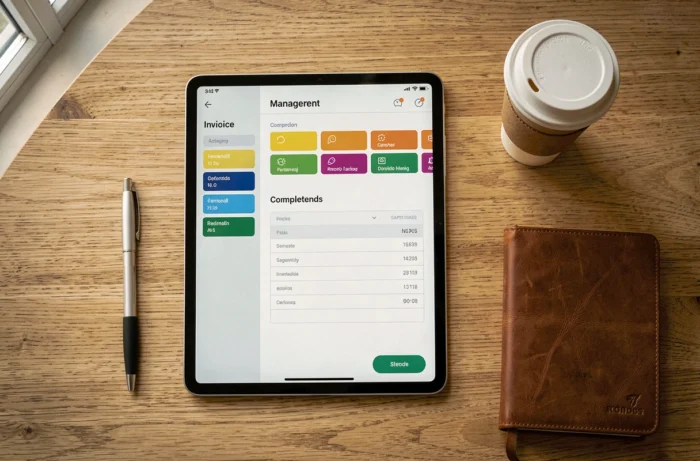
The choice of invoicing software for self-employed individuals hinges on its ability to cover the complete cycle: quotes, structured invoices, transmission to the platform, payment tracking, and tax reporting. A tool that does not manage e-reporting will be obsolete by September 2027.
The reform of electronic invoicing transforms a simple administrative act into a standardized technical process. For a self-employed individual, invoicing software becomes the only realistic means of producing compliant documents, transmitting them through regulatory channels, and maintaining traceability that can be exploited in case of an audit.