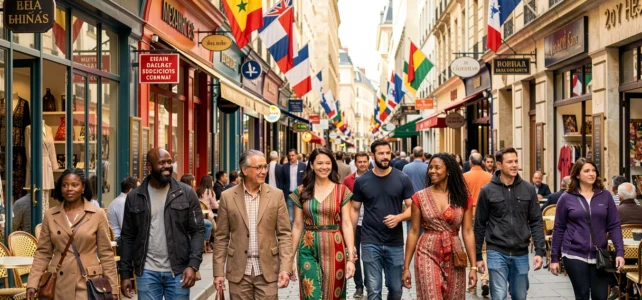
France has cities where dozens of languages, cuisines, and traditions intersect daily. This ranking is based on the diversity of the communities present, the richness of intercultural events, and the visible presence of world cultures in urban spaces. You will find expected metropolises, but also less obvious destinations where multiculturalism shapes the character of the city.
1. Marseille, the quintessential Mediterranean crossroads
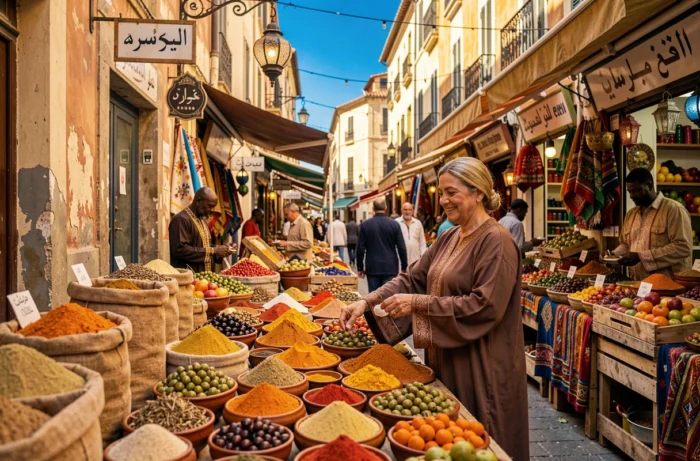
Marseille is undoubtedly the French city where cultural diversity is experienced most intensely. The neighborhoods of Noailles, Belsunce, and La Belle de Mai concentrate communities from the Maghreb, sub-Saharan Africa, the Comoros, and Southeast Asia.
This mosaic is reflected in the markets, restaurants, and neighborhood festivals. The Noailles market, nicknamed “the belly of Marseille”, offers spices, fruits, and products that cannot be found elsewhere in mainland France. Among the most multicultural cities in France, Marseille holds a unique place due to the antiquity and density of its cultural mixes.
2. Paris, a global showcase of diasporas
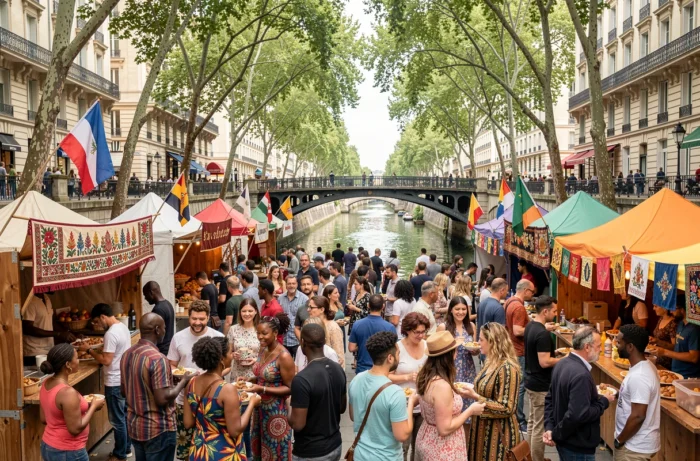
Paris is home to communities from all continents. Belleville mixes Chinese, North African, and Eastern European populations within a few streets. The Goutte-d’Or neighborhood, in the 18th arrondissement, is a landmark for West African communities.
The capital also attracts a significant English-speaking community. According to the linguistic context analyzed by Babbel, Paris largely operates “on English time” in its business and tourism sectors, making it the most multilingual city in the country.
3. Lyon, confluence of cultures
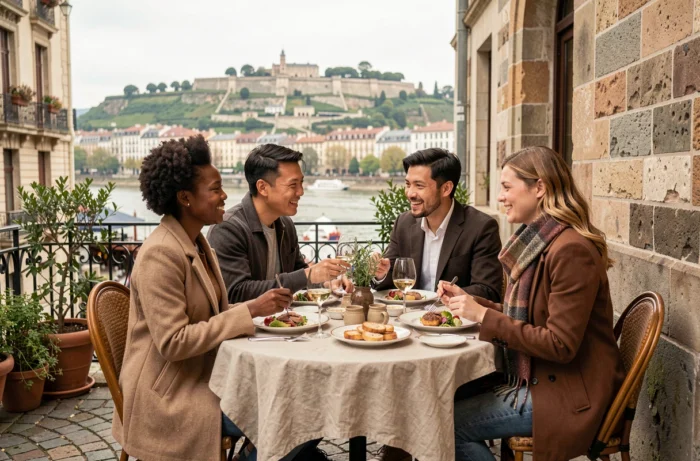
Lyon stands out for its multiculturalism rooted in its working-class neighborhoods. La Guillotière, in the 7th arrondissement, brings together Vietnamese grocery stores, Turkish restaurants, and Maghreb shops side by side.
The Lyonnaise culinary scene incorporates these influences well beyond traditional bouchons. The Halles Paul Bocuse itself hosts products from various origins. Lyon also hosts the Sens Interdits festival, dedicated to international theater, which gives visibility to world cultures.
4. Strasbourg, an open door to Europe
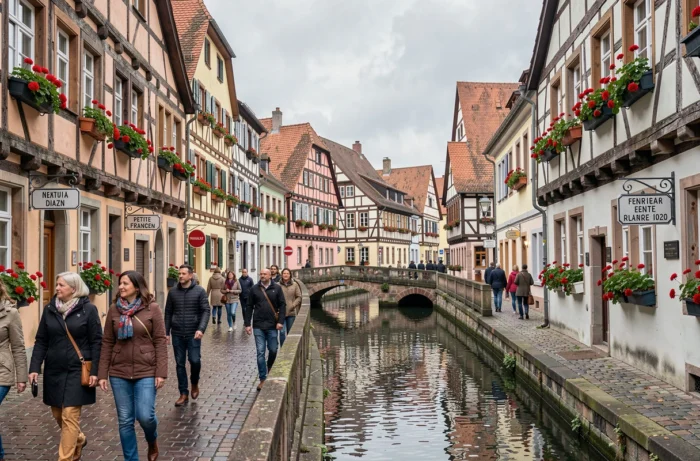
Strasbourg is one of the few French cities where bilingualism is part of daily life. As the seat of the European Parliament, it hosts officials and diplomats from across the Union. This institutional status has created a multicultural fabric distinct from that of traditional major metropolises.
The Europe Bridge connects Strasbourg to Kehl in Germany, and cross-border exchanges nourish a vibrant Franco-German culture. Alsatian, European languages, and those from Turkish and Maghreb diasporas coexist in neighborhoods like Hautepierre or Meinau.
5. Lille, melting pot of the northern border
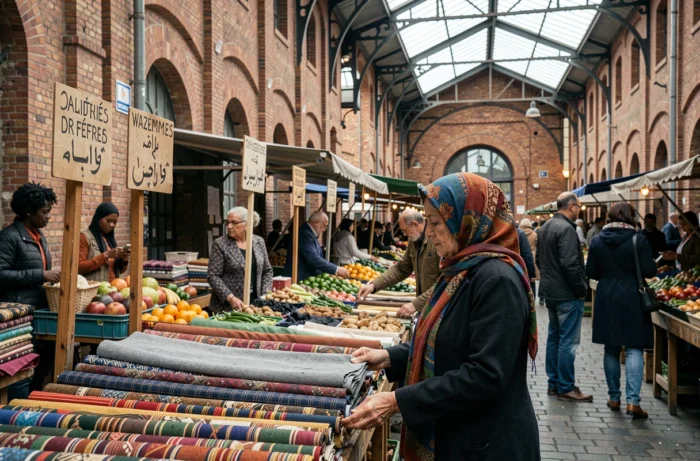
Lille carries a Flemish heritage visible in its architecture, gastronomy, and some popular traditions. Its proximity to Belgium and the Netherlands gives it an openness to Northern Europe.
The Wazemmes neighborhood symbolizes this diversity. Its Sunday market brings together Maghreb, sub-Saharan, and Asian populations in a festive atmosphere. Wazemmes is often cited as one of the most cosmopolitan markets in France.
6. Nice, between the Mediterranean and Russian heritage
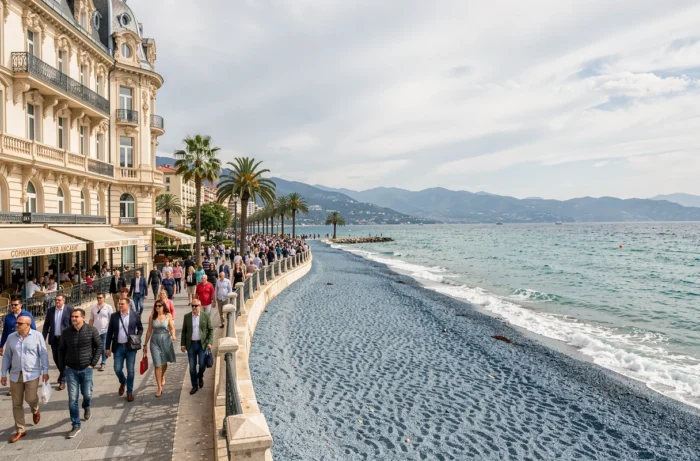
Nice is home to a Russian community that has been established since the 19th century. The Saint Nicholas Orthodox Cathedral, one of the largest outside Russia, is the most visible testament to this. This heritage coexists with deep Italian influences, inherited from the time when Nice belonged to the County of Savoy.
The city also hosts North African and Asian communities. This layering of influences, in a compact area between sea and mountains, gives Nice a unique multicultural character on the French Riviera.
7. Toulouse, Occitan and cosmopolitan blending
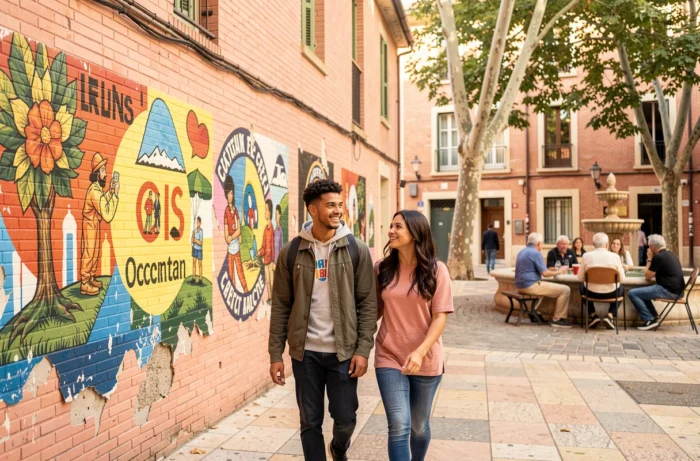
Toulouse blends a strong Occitan identity with a multicultural fabric fueled by the aerospace industry. Engineers and technicians from around the world come to work at Airbus and its subcontractors, forming an active international community.
The Arnaud-Bernard neighborhood, near the historic center, concentrates African restaurants, Eastern grocery stores, and student bars in a small area. Skilled labor immigration coexists with older diasporas, creating a dual-speed multiculturalism unique to the Pink City.
8. Perpignan, Catalan pride at the gates of Spain
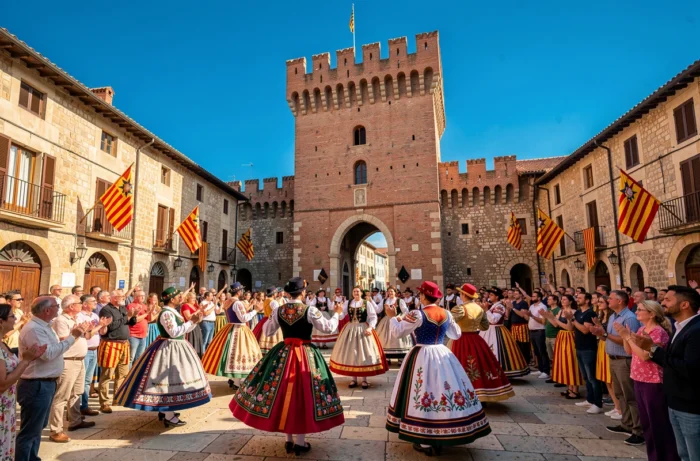
Perpignan proudly claims a strong Catalan identity, with bilingual French-Catalan signs and traditional festivals like Sant Jordi. This cross-border culture is the foundation of local multiculturalism.
The city is also home to one of the largest Roma communities in France, whose presence dates back several centuries. The Saint-Jacques and Saint-Mathieu neighborhoods testify to this coexistence between Romani, Catalan, Maghreb, and sub-Saharan cultures.
9. Cayenne, Amazonian and Caribbean mosaic
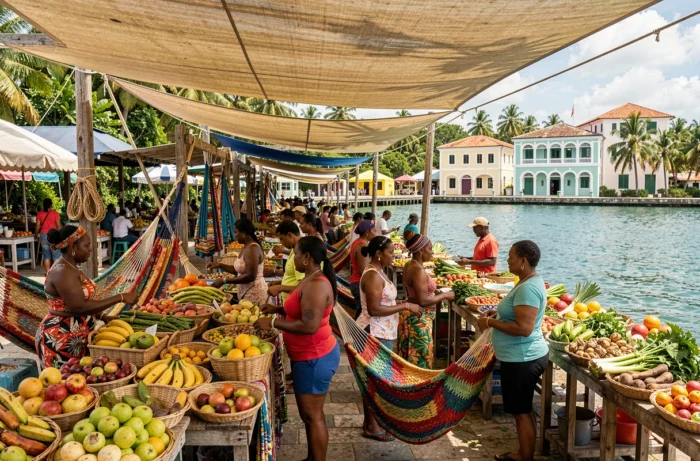
Cayenne is probably the most diverse city in the French Republic, proportionally speaking. Creoles, Amerindians, Hmongs, Brazilians, Haitians, and Surinamese live side by side.
The central market of Cayenne reflects this unique diversity: it features Amazonian, Caribbean, and Asian products on the same stalls. The proximity to Brazil and Suriname makes Cayenne a place of constant passage and mixing, with a cultural life where the Guiana carnival remains the highlight of the year.
10. Menton, the Franco-Italian dolce vita
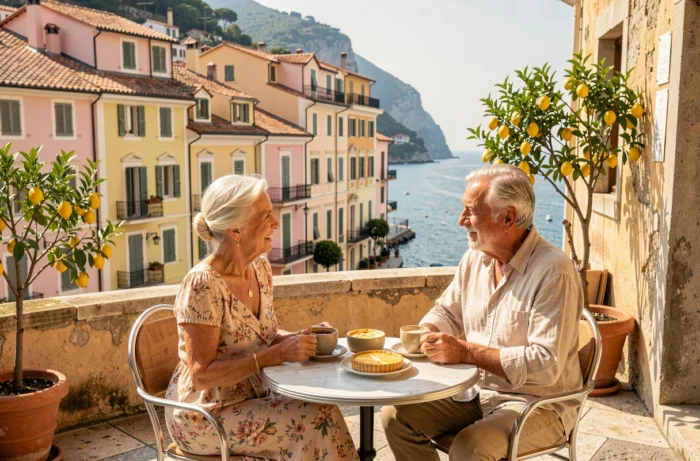
Menton closes this ranking with its discreet yet profound bicultural character. Located at the Italian border, the city lives to the rhythm of two languages and two culinary cultures. The Mentonnais, a Ligurian dialect, persists in some families.
The Lemon Festival attracts visitors from around the world, but it is in daily life that Menton’s multiculturalism is felt: Italian shops, British residents, and Scandinavian retirees create an astonishingly international social fabric for a city of this size.
This ranking of multicultural cities in France shows that diversity is not limited to major metropolises. Medium-sized cities like Perpignan or Menton, and overseas territories like Cayenne, offer cultural experiences of a richness that classic tourist circuits often overlook.