
A pair of trousers whose seam splits after three weeks, a T-shirt a child refuses to wear because it feels scratchy: school uniforms raise very practical questions for parents. Choosing comfortable clothes for school is about more than finding the right size. Fabric, fit, ease of dressing and the possibility of repairing or passing on a garment all matter.
Repair school clothes instead of replacing them
Have you ever noticed how a hole in the knee or a broken zip can be enough to send a pair of trousers to the bin? Replacing them straight away is costly and creates waste.
In France, the textile repair bonus lets you take a garment or pair of shoes to a certified professional to extend its lifespan. The scheme covers repairs such as replacing zips, mending seams and restoring soles.
For school uniforms, this can make all the difference. A polo shirt with a fraying collar or white trousers stained around a tear can get a new lease of life at an alterations shop. It is better to invest in a quality garment that can be repaired than in several cheap items that end up in the bin after a term. Parents looking for suitable school uniforms can find a range of durable pieces at https://www.lesblancsdecole.com, making it easier to take this approach.
A well-made garment can be repaired; a cheap one gets thrown away. Before buying, check the strength of the seams, the quality of the zip and the thickness of the fabric in high-friction areas (knees, elbows and inner thighs).

Fabric and fit: what makes school clothes comfortable
Comfortable school clothes come down to two things: fabric and fit. A child who spends the day sitting, standing and crouching in the playground needs complete freedom of movement.
The right fabric for sensitive skin
Cotton remains the go-to choice for school uniforms. It is breathable, absorbs sweat and stands up to frequent washing. Organic cotton limits chemical residues in contact with the skin, which is worth considering for children prone to irritation.
Jersey and fleece offer stretch for T-shirts and jogging bottoms. Linen is better suited to warmer weather and regulates temperature well, but creases easily, which can be an issue in the classroom.
A fit that allows free movement
Why does the fit matter so much? Because trousers that are too tight at the waist or a polo shirt that is too snug around the armholes can stop a child from concentrating. Physical discomfort can lead to restlessness.
- Elastic-waist trousers let children dress themselves and do not dig into their stomachs when they sit down
- T-shirts and polo shirts with a slightly rounded neckline are easy to pull over the head, with no buttons for younger children to manage
- Flat seams reduce chafing, especially under the arms and along the thighs
Choose a fit with about a centimetre of room rather than a snug fit. Children grow quickly, and a slightly loose garment at first can be worn for several extra months.
Children’s independence and choosing school clothes
Recent assessments of school uniform trials show a gap between adults’ and children’s perceptions. Pupils surveyed often express negative feelings about being required to wear a uniform, while the benefits expected by parents and teachers do not always translate into an improved day-to-day school experience.
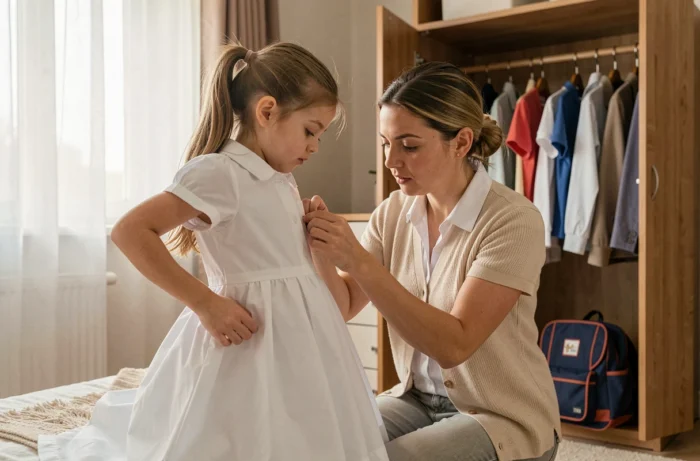
The same applies to school uniforms chosen as a family. Trying clothes on with your child before buying can prevent refusals when it is time to get dressed in the morning. Children are more willing to wear clothes they have helped choose.
In practice, this means letting your child feel the fabric against their skin, asking them to raise their arms and crouch in the trousers, and checking that they can put the garment on and take it off without help. For children in nursery school, simple fastenings (popper buttons, Velcro) encourage independence in the bathroom and changing room.
Make school uniforms last and pass them on
White school clothes show signs of wear sooner than dark clothes. Stains, yellowing and wear are more noticeable. A few simple habits can help them last longer without too much effort.
Care for white clothes properly
Washing at a low temperature with sodium percarbonate helps keep whites bright without damaging the fibres. Fabric softeners, on the other hand, leave a coating that can make fabric look grey over time. It is best to avoid them.
Pass clothes on or reuse them when they no longer fit
School uniforms in good condition can easily be passed down between siblings or through school clothing swaps. A uniform does not make social differences disappear, but reusing quality clothes reduces back-to-school costs without compromising on comfort.
- Store items in good condition in a vacuum bag to prevent yellowing while they are packed away
- Write the size and brand on the inside label with a fabric marker to make sorting easier
- Check the seams and elastic before passing clothes on; a quick alteration may be all it takes to put a garment back into circulation
Choosing comfortable, durable school uniforms means balancing three things: breathable fabric that stands up to washing, a fit that lets children move freely, and construction strong enough to withstand repairs. The final decision is up to the child when they try the garment on.