When you open your wardrobe in the midst of a seasonal transition, the main challenge is to distinguish the truly wearable fashion trends for everyday life, between the office, commuting, and spontaneous outings. This season encourages the combination of structured pieces with softer materials, in a palette that oscillates between saturated tones and natural neutrals.
Textured materials: the trio of denim, smooth leather, and suede for everyday wear
Rather than stacking trendy pieces without logic, it’s better to start from a coherent textile base. The trio that is making a comeback in all wardrobes this season is denim, smooth leather, and suede. Three materials that combine effortlessly and hold up from morning to night.
Thick denim, worn as a jacket or straight jeans, serves as the backbone. It is layered with a piece in smooth leather (a short jacket, a structured skirt) to create an immediate contrast of textures. Suede adds a touch through accessories or a sleeveless vest, breaking up the overly raw look of the ensemble.
What makes this trio relevant is its climate versatility. You can adjust the layers according to the temperature without sacrificing the coherence of the look. A barrel jean paired with a fine leather jacket works well in cool weather as well as during an evening on the terrace. You can find selections built around these combinations on the fashion page of DLG Fashion, featuring pieces that fit into this modular wardrobe logic.
Seasonal colors: choosing between saturated and neutral based on usage
The seasonal palette is clearly divided into two camps. On one side, saturated colors like burgundy, olive green, or deep blue. On the other, natural neutrals (stone beige, soft gray, off-white) that serve as the foundation of the wardrobe.
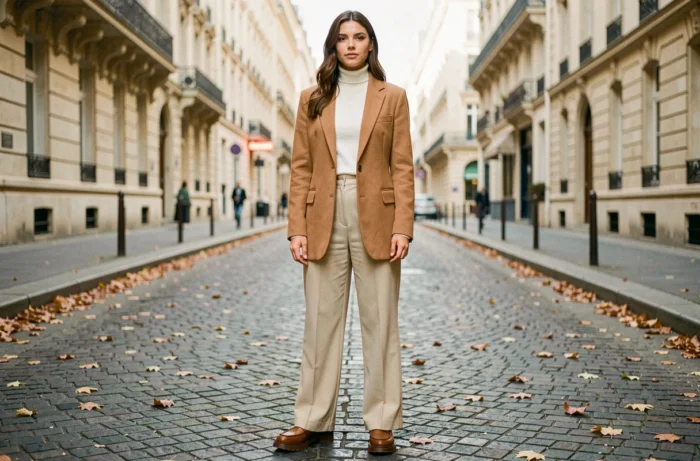
In practice, betting on a simple ratio works better than following every trendy color. Keep two to three pieces in neutral tones (pants, coat, bag) and inject the strong color through a single visible piece: a burgundy sweater, an olive green shirt, a dress in a deep blue.
A common mistake is to adopt several bright colors in the same outfit. The result rarely creates a unique style. One strong color per look is enough to anchor a silhouette in the season without tipping into a total runway look.
Which colors for which context
- Office or professional meeting: neutral base (beige, gray) with a burgundy leather accessory or a saturated scarf to mark the style without overloading
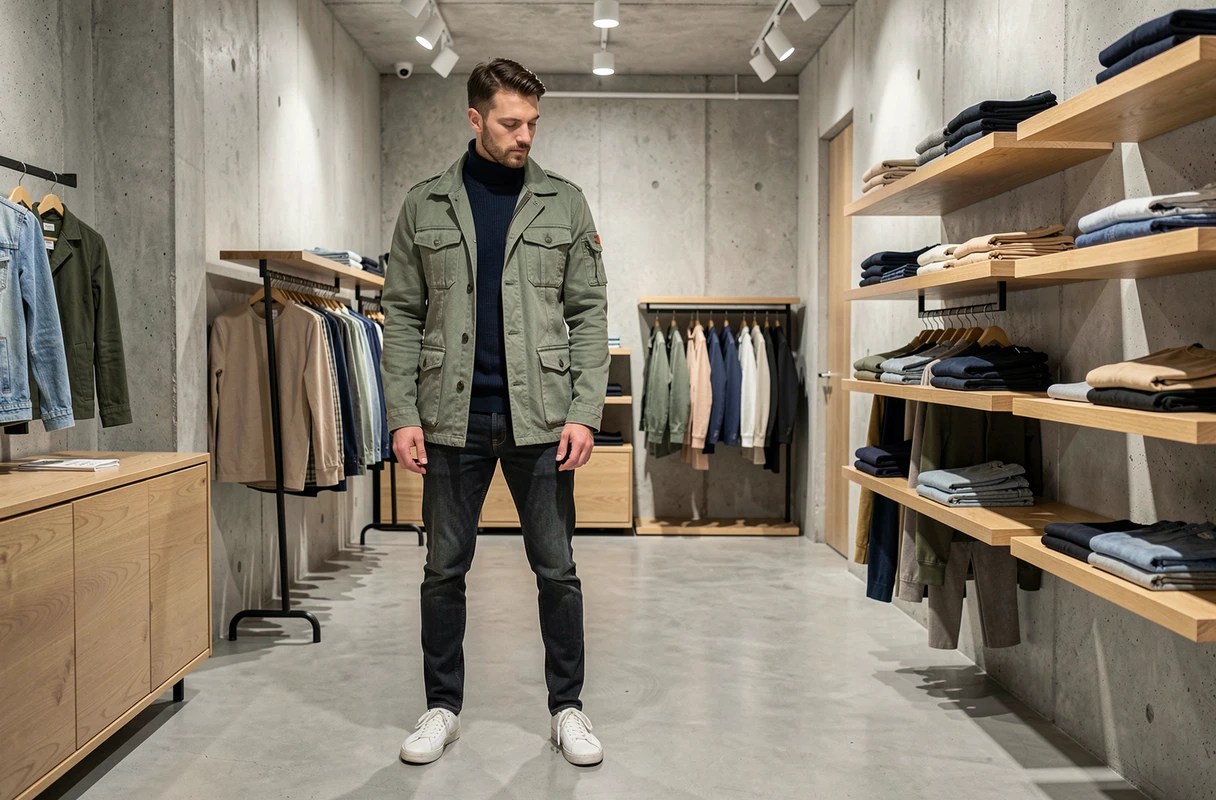
- Weekend or casual outing: olive green or khaki as the main piece (cargo, utility jacket) paired with raw denim
- Evening or event: deep blue in a dress or suit, enhanced by a textured material like suede or a cut-out detail
Utility pieces and workwear: the most wearable trend of the season
This season’s fashion trends are no longer just aesthetic. We are seeing a rise in a more functional interpretation of the wardrobe, with workwear-inspired pieces that meet real practical needs: accessible pockets, cuts that allow movement, durable materials.
This approach is found in jackets with patch pockets, thick canvas cargo pants, and short jackets reminiscent of the aviator universe. These pieces are not new in themselves, but their treatment this season is more structured and less streetwear. The cuts are tailored, the finishes refined, the colors subdued.
To adopt this trend without looking like a military catalog, isolate a single utility piece per outfit. A well-cut cargo with a fine knit sweater and ankle boots is enough. The challenge is to maintain the look while enjoying the comfort and practicality that these clothes provide.
Functional layering: layering with method
Layering returns every autumn-winter, but this season it takes a more thoughtful turn. We no longer layer just for visual effect. Each added layer must be removable without breaking the silhouette.
A concrete example: a fitted t-shirt under an open shirt, itself under a short leather jacket. Indoors, you can remove the jacket and the shirt holds the look. It’s this modular logic that distinguishes a well-constructed personal style from a haphazard stack.
Adopting a unique style this season without completely renewing
Completely renewing your wardrobe every season makes no practical sense and has no stylistic interest. The most sustainable fashion trends are those that we integrate into what we already own. Before buying, identify what is missing to complete the associations described above.
- Take inventory of your denim, leather, and suede pieces to check if the basic trio is covered
- Spot the saturated color that appears most in your current looks (burgundy, green, blue) and reinforce it with one or two additional pieces
- Add a single utility or workwear element that integrates with existing outfits without contradicting them
Opinions vary on this point, but the majority of successful looks this season rely on three to five key pieces, not on a completely renewed wardrobe. A unique style is built through precise choices, not by accumulation.
The best approach remains to test combinations with what you have, identify concrete gaps, and invest in durable pieces that last through multiple seasons. A well-cut smooth leather jacket or barrel jeans maintain their relevance for two to three years, which justifies a higher budget at purchase.