A child who spends Wednesday at their grandmother’s does not experience the same day as they do with their parents. The pace slows down, the rules are negotiated differently, and conversations take paths that family life does not always allow. This influence of grandparents on the modern family goes beyond mere childcare assistance. It impacts the emotional development of the child, the balance of the parental couple, and sometimes even the legal framework.
Grandparent caregivers: the pressure of the sandwich generation
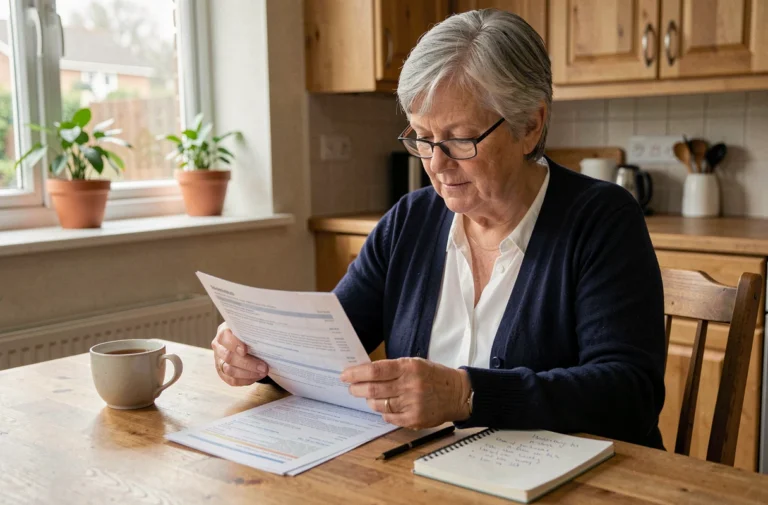
Have you ever noticed that a grandparent can pick up the children from school while also accompanying a partner to a medical appointment in the same week? This accumulation of responsibilities has a name: the dual caregiver role.
A survey conducted by AARP among approximately 3,300 American grandparents reveals that some of them care for a dependent adult and grandchildren at least once a month. This phenomenon particularly affects grandparents under 50 years old.
In practical terms, this means that the grandparent does not always arrive “fresh and available” for their grandchildren. The fatigue accumulated between two caregiver roles alters the quality of the time spent together. Parents relying on this regular help would benefit from assessing the actual burden carried by the grandparent, as explained by the family site Maman au Quotidien in a report dedicated to these family balances.
Becoming aware of this pressure allows for adjusting expectations. A grandparent exhausted by their caregiver role with their own partner should not feel guilty about reducing the frequency of care.

Emotional connection at a distance: the role of digital tools between grandparents and grandchildren
Geographical proximity has long conditioned the relationship between grandparents and grandchildren. A grandparent living several hundred kilometers away would see their grandchildren during holidays, sometimes less.
This pattern has changed. According to a survey by the Pew Research Center published in 2025, the grandparental bond is now hybrid, combining physical presence and screen interactions. A weekly video call, a voice message sent upon waking, a photo shared on a family messaging app: these micro-interactions maintain an emotional continuity that distance once made impossible.
The digital tool does not replace presence. A three-year-old does not benefit from a video call in the same way as a teenager. For younger children, the familiar voice matters more than the image. For older ones, an exchange of messages creates a complicity different from that of a Sunday meal.
Adapting the channel to the child’s age
- Before age 4, prioritize short calls with the grandparent’s voice, accompanied by a parent holding the screen
- Between ages 5 and 10, shared online games or reading a story remotely work as a real moment together
- From age 11, written exchanges (messages, sending commented photos) build a bond that resembles a conversation between close ones
The emotional role therefore no longer solely depends on geographical proximity. A distant involved grandparent can weave a strong bond, provided they adapt their tools to the child’s developmental stage.
Article 371-4 of the Civil Code: the legal framework for grandparents’ visitation rights
When family relationships deteriorate, some grandparents find themselves deprived of contact with their grandchildren. Separation of the parental couple, intergenerational conflict, relocation: the reasons vary, but the outcome is the same.
French law provides a precise framework. Article 371-4 of the Civil Code states that the child has the right to maintain personal relationships with their ancestors. The wording is important: it is primarily the child’s right that is protected, not that of the grandparent.
The family court judge can organize gradual visits, sometimes mediated (in the presence of a third party), when circumstances require it. The child’s age, the intensity of the family conflict, and the conditions of reception are taken into account.
Family mediation before going to court
Recent procedural developments encourage family mediation before any referral to the judge. This mediation process often helps restore dialogue without legalizing the relationship.
- Mediation can be proposed by the judge or directly requested by one of the parties
- It aims to find an agreement on the frequency and modalities of meetings
- In case of failure, recourse to the family court judge remains possible, with a formal request for visitation rights
Family mediation often avoids years of legal proceedings and better preserves the future relationship between the grandparent and the child. An imposed judgment rarely creates the conditions for a peaceful bond.
Transmission of family values: what grandparents bring to daily life
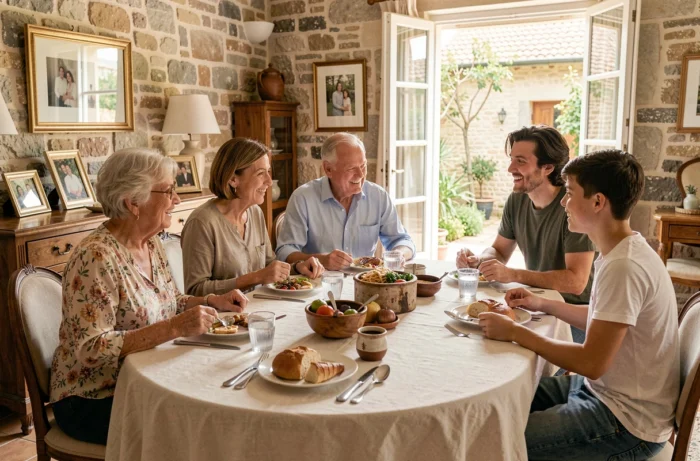
Beyond childcare and the legal framework, grandparents pass on something that parents do not always have the time to articulate. Family history, culinary traditions, anecdotes about the parent’s childhood: these stories build a sense of belonging in the child.
A child who knows where their grandparents come from, who knows their great-grandfather’s profession or their grandmother’s cake recipe, anchors their identity in a continuity. This transmission is not spectacular. It happens during a meal, a walk, a moment of calm.
Grandparents also bring a different perspective on time. They do not have the same urgencies as parents. This relative slowness offers the child a space where academic performance or structured activities take a back seat. The simple act of doing nothing together has an educational value that the parental rhythm cannot always provide.
The modern family of 2025 operates on a broader and more flexible network than before. Grandparents hold a place that no one else can fill, provided that everyone’s boundaries are respected and that dialogue between generations remains open. When this dialogue becomes blocked, mediation or the legal framework takes over. In all cases, the child’s interest guides everything.