A window is not just a frame and glazing. It is an assembly whose performance is measured overall, through the Uw coefficient, which takes into account the frame, the glass, and the spacer. Choosing windows by focusing on a single parameter (the material or type of glazing) often leads to poorly calibrated compromises. The most reliable approach is to reason piece by piece and façade by façade.
Uw, Sw, Tl: three values to read on the complete window
The first reflex when buying windows is to compare materials. The second should be to read the technical coefficients, as these determine the actual comfort once the carpentry is installed.
The Uw coefficient measures the thermal transmission of the entire window (frame + glazing). The lower it is, the less heat escapes. Be careful not to confuse Uw and Ug: Ug only concerns the glass, and it is always more flattering than Uw. However, it is Uw that serves as a reference for financial aid and regulatory compliance.
The solar factor Sw indicates the amount of solar energy transmitted indoors. A high Sw allows sunlight heat to enter, which is desirable on a north façade but problematic on a south-facing bay window in summer. This criterion, long neglected, is becoming central to avoid overheating in recent constructions.
The light transmission coefficient (Tl) measures the share of natural light that passes through the glazing. A high Tl means more interior brightness. Before consulting the best windows for homes according to Maisonea, keep these three values in mind: they allow for objective product comparisons, regardless of the material.

Adapting windows to each façade and each room
Most renovation or construction projects result in a uniform choice: the same window model for the entire house. It is simpler to order, but each façade and each room has distinct needs for insulation, light, acoustics, and security.
North façade: priority on thermal insulation
A north-facing window receives almost no direct solar gain. The solar factor Sw is of little importance here. On the other hand, the lowest possible Uw limits heat loss, as this façade is the coldest in the house. Triple glazing may be justified on this wall, especially in harsh climatic zones.
South façade: managing the sun above all
On a highly exposed façade, the main risk is summer overheating. Solar control glazing (moderate Sw) combined with external protections (shutters, sunshades) offers a better compromise than standard triple glazing, which also reduces brightness in winter.
Street-facing bedroom: acoustics take precedence
For a bedroom facing a busy street, acoustic attenuation becomes the determining criterion. Asymmetrical glazing (two panes of different thicknesses) reduces noise more effectively than standard double glazing with identical panes. The type of opening also matters: a well-sealed tilt-and-turn window insulates better from noise than a sliding window.
Ground floor: added security
On the ground floor, especially set back from the street, laminated glazing delays break-ins. This criterion adds to thermal and acoustic performance. For upper floors, the issue is less pressing, except in cases of easy access (balcony, adjacent flat roof).
Window material: PVC, aluminum, or wood
The debate between materials is often presented as a binary choice. The reality is more nuanced, as the material influences style, maintenance, and the fineness of profiles, not just insulation.
- PVC offers the best insulation/price ratio. Its profiles are thicker, which slightly reduces the glazed surface. It requires no special maintenance and is suitable for most renovation projects.
- Aluminum allows for thin profiles and large bay dimensions. It is rigid and durable, but its thermal performance depends on the quality of the thermal break integrated into the frame.
- Wood remains the most naturally insulating material. It requires regular maintenance (staining or painting) and integrates well into older homes or areas protected by a heritage architect.
- Mixed joinery (wood-aluminum, for example) combines the insulation of wood on the inside and the durability of aluminum on the outside, at the cost of a higher budget.
The choice of material must also take into account local constraints. Some municipalities impose specific colors or materials in their local urban planning regulations.
Window opening type: beyond aesthetics
The mode of opening is not just a matter of taste. It affects ventilation, interior space, and security.
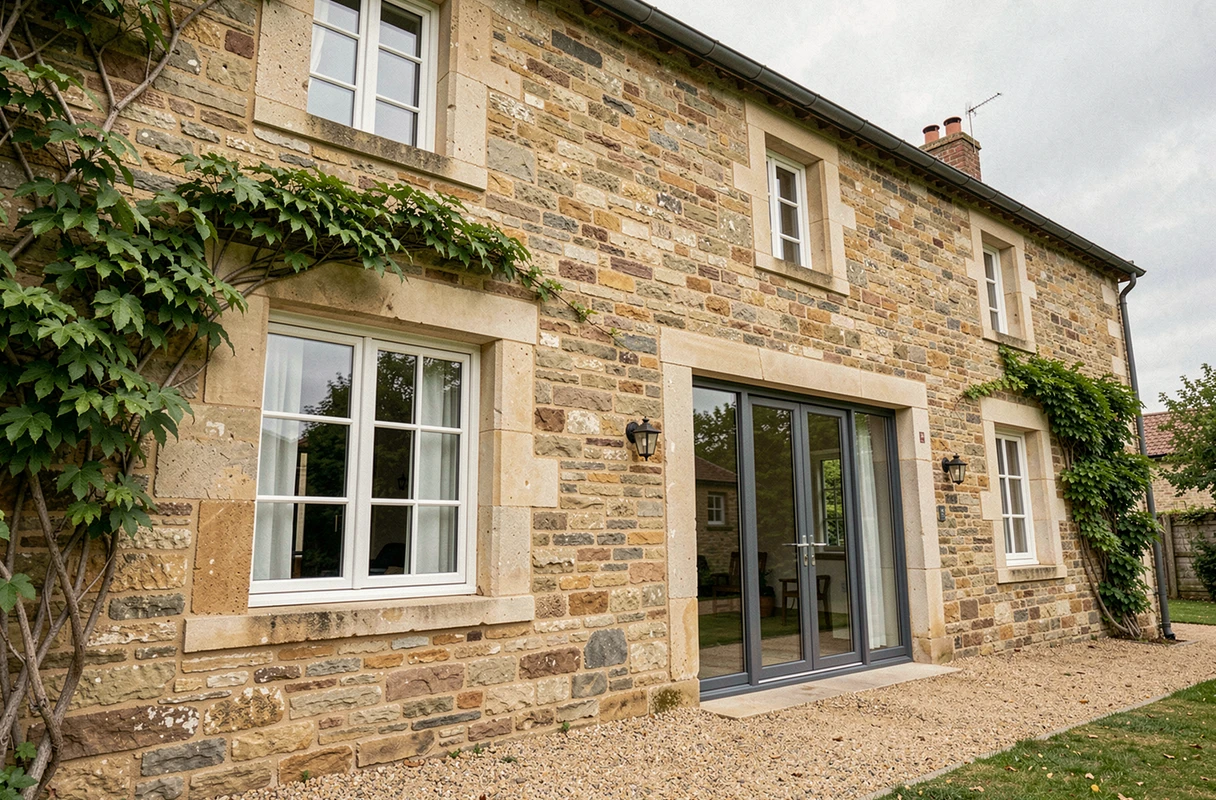
The French window (sashes opening inward) remains the most common. It offers a full opening and a good level of air tightness when closed. The tilt-and-turn adds a top venting position, practical for airing without compromising security, especially in children’s bedrooms.
The sliding window frees up interior space and is suitable for large openings to a terrace. In return, a standard sliding window insulates less well than a French opening due to the guiding rail. Lift-and-slide windows improve this point, but their cost is significantly higher.
For a bathroom or toilet, a fixed frame combined with a small tilt-and-turn opening is often sufficient. Multiplying openings in a humid room increases the risk of condensation on the seals.
Windows and renovation: what changes the game
In renovation, installing new windows involves choosing between a total removal (removing the old frame) and a renovation installation (the new frame is fixed onto the old one). Total removal is more expensive but preserves the glazed surface and ensures better airtightness.
The quality of the installation is as important as that of the carpentry. A high-end product poorly installed will allow air to pass through the junctions between the frame and the wall. Checking the installer’s certifications (RGE mention for accessing aids) and requesting an airtightness test after work limits this risk.
Replacing single-glazed windows with double or triple glazing reduces thermal losses through openings. The actual gain depends on the condition of the rest of the building envelope: if the walls and roof are not insulated, the benefit remains limited. Prioritizing the most degraded windows or those in living spaces exposed to noise allows for a quicker return on investment than changing everything at once.