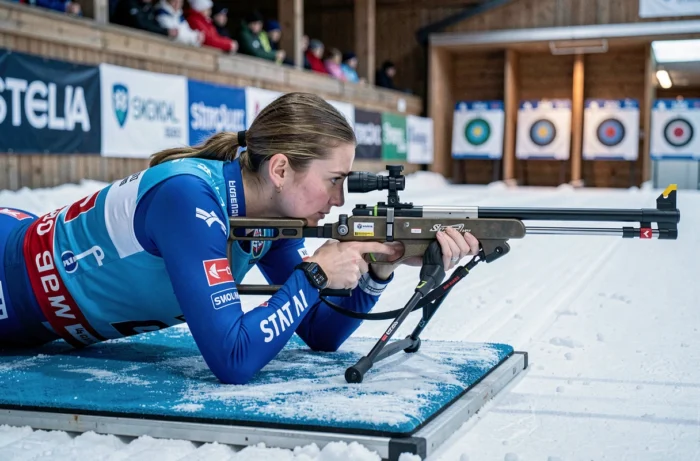
The overall women’s ranking in the Biathlon World Cup is based on a points system awarded for each race. Understanding this scoring system allows for measuring the gaps between biathletes and interpreting the hierarchy that emerges throughout the season. The recent overhaul of the IBU scoring system has changed the distribution of points, making the reading of totals less intuitive than before.
Break in comparability between seasons after the IBU scoring reform
One aspect rarely highlighted in traditional presentations of the women’s ranking is: the post-reform point totals are no longer comparable to previous seasons. The IBU has revised the distribution of points by placement and the depth of distribution, which mechanically alters the gaps between biathletes.
In practical terms, a leader with a high total at the end of the season does not necessarily dominate more than a winner from previous years. The new scoring system redistributes points more widely within the pack, inflating individual totals without reflecting a higher level of performance.
This phenomenon is comparable to what is observed in other disciplines that have reformed their scoring: the organizations themselves advise against comparing post-reform scores with those from previous editions. To follow the women’s ranking and biathlon points system in detail, it is essential to keep this methodological break in mind before any longitudinal analysis.
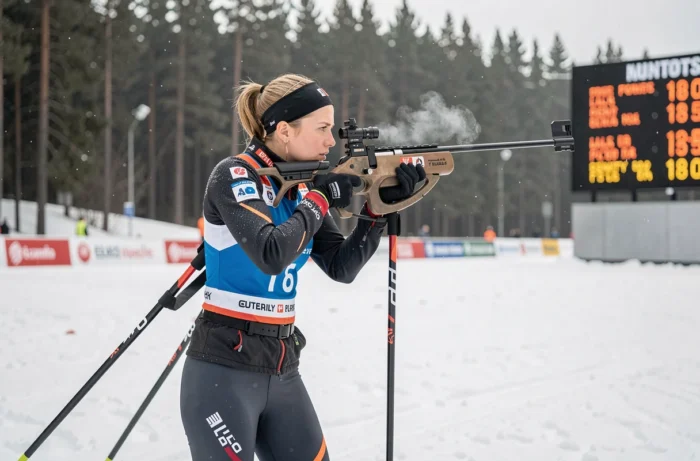
Points system by event in the women’s World Cup
The overall ranking is built on the accumulation of points obtained in each race format. Not all events carry the same weight in the final hierarchy, and the scoring varies depending on the type of competition.
| Type of event | Format | Impact on overall ranking |
|---|---|---|
| Sprint | Short race with two shoots (prone + standing) | High frequency, many opportunities to score |
| Pursuit | Start in order of the sprint, four shoots | Rewards consistency over two days |
| Individual | Long race, one-minute penalty per missed target | Scoring enhanced by IBU reform |
| Mass start | Group start, four shoots | Reserved for the top-ranked athletes |
| Relay / Mixed relay | Team event | Points awarded based on national ranking, not individual overall |
The sprint generates the largest volume of races in a season, making it the most determining format for the overall ranking. The pursuit, directly linked to the sprint result, amplifies or corrects the gaps from the weekend.
The individual, with its one-minute penalty per missed shoot, remains the format where shooting accuracy weighs the most. The reform of the scoring system has enhanced the points awarded for this event, reinforcing its relative weight in the end-of-season total.
Points strategy and end-of-season management in women’s biathlon
Traditional presentations of the ranking are limited to counting race by race. In practice, teams adapt their strategy based on the calendar and the remaining points to be distributed.
The World Cup season includes several stages before major events (World Championships or Olympic Games). Biathletes aiming for the crystal globe must balance physical preparation for peak Olympic form with the regular accumulation of points in the intermediate stages.
- Participating in all races maximizes scoring opportunities but increases fatigue over a long season
- Skipping a stage to prepare for a major event can cost several dozen places in the overall ranking if competitors score big
- Mass starts, reserved for the top-ranked athletes, create a leverage effect: regularly accessing them guarantees additional points that pursuers cannot scrape
This mechanism explains why some biathletes dominate the overall ranking without necessarily winning the most individual victories. Consistency takes precedence over occasional brilliance in a system that distributes points down to the last places.
Shooting and cross-country skiing: two distinct levers in point allocation
Biathlon combines cross-country skiing and rifle shooting. In the women’s ranking, points do not distinguish between these two components: only the final result matters. However, performance analysis shows that the profiles of leaders vary according to the formats.
In the sprint and pursuit, speed on skis often compensates for imperfect shooting. In the individual, each missed target costs one minute in penalty, which almost completely neutralizes the advantage of a fast but inaccurate skier.
The French biathletes, who have the maximum quotas in sprint and individual for the season, can therefore spread their strengths over more races and accumulate points where their profile (shooting or skiing) benefits them the most.
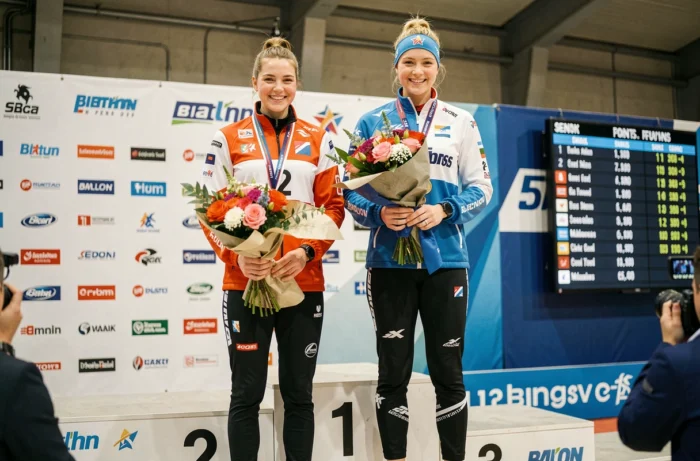
Reading the overall women’s ranking: what the numbers show and what they hide
A raw ranking, expressed in total points, provides the hierarchical order but hides several realities. Two biathletes separated by a few dozen points can have radically different seasonal profiles.
- A consistent athlete finishing between fifth and fifteenth place in each race may outpace a rival who alternates between victories and withdrawals
- The number of races contested directly influences the total: an injury or a tactical choice to skip a race skews direct comparison
- Points scored in relays do not count in the individual ranking, making a biathlete’s contribution to her national team invisible
Conversely, the ranking by discipline (sprint globe, pursuit globe, individual globe) offers a more nuanced view of each athlete’s specialties. The overall crystal globe rewards versatility across the entire season, not dominance in a single format.
With the reform of the scoring system, the gaps at the end of the season sometimes appear tighter or wider than before, depending on the depth of distribution chosen by the IBU. Comparing the total of a current winner with that of a champion from three seasons ago is akin to comparing two different units of measurement. The only reliable reading remains that of the rank, race by race, within the same season.